Honey production is a fascinating and rewarding aspect of beekeeping. It involves several key steps, from the bees’ collection of nectar to the marketing and selling of the final product. This guide covers the entire process of honey production, including extracting and processing honey, as well as effective marketing strategies.
Process of Honey Production
1. Nectar Collection
The journey of honey begins with bees collecting nectar from flowers. Worker bees visit various floral sources, using their long tongues to extract nectar, which is then stored in their honey stomachs. Enzymes in the bees’ stomachs break down the nectar’s complex sugars into simpler forms, initiating the honey-making process.
2. Nectar Transformation
Once the worker bees return to the hive, they transfer the nectar to house bees through a process called trophallaxis. The house bees continue to break down the nectar’s sugars and store it in hexagonal wax cells. To reduce the water content and transform the nectar into honey, the bees fan their wings to promote evaporation.
3. Honey Storage and Capping
When the nectar’s water content drops to around 18%, it becomes honey. The bees then seal the honey-filled cells with a wax cap to preserve it. This capping process indicates that the honey is ready for extraction.
Extracting and Processing Honey
1. Harvesting Honey
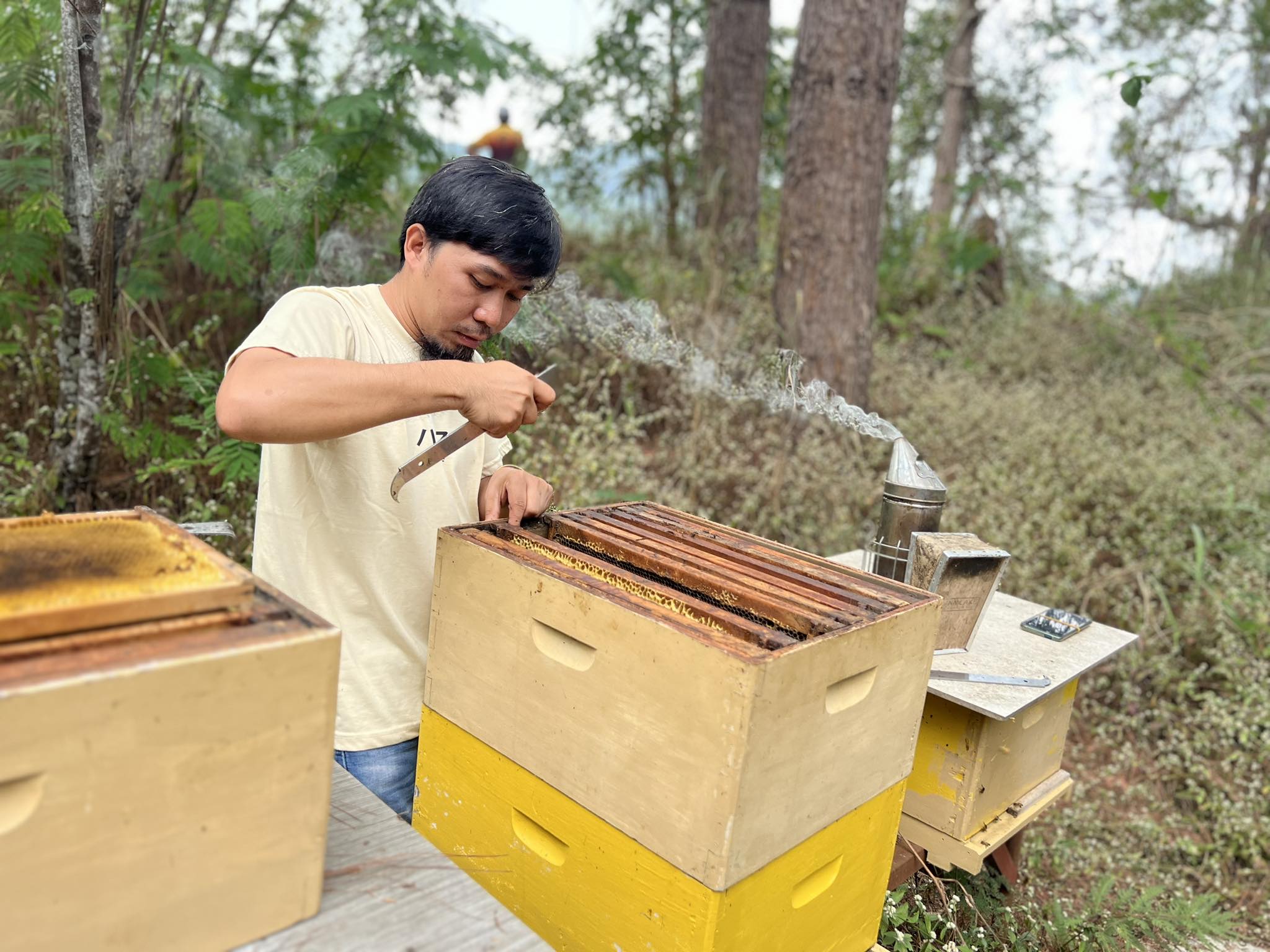
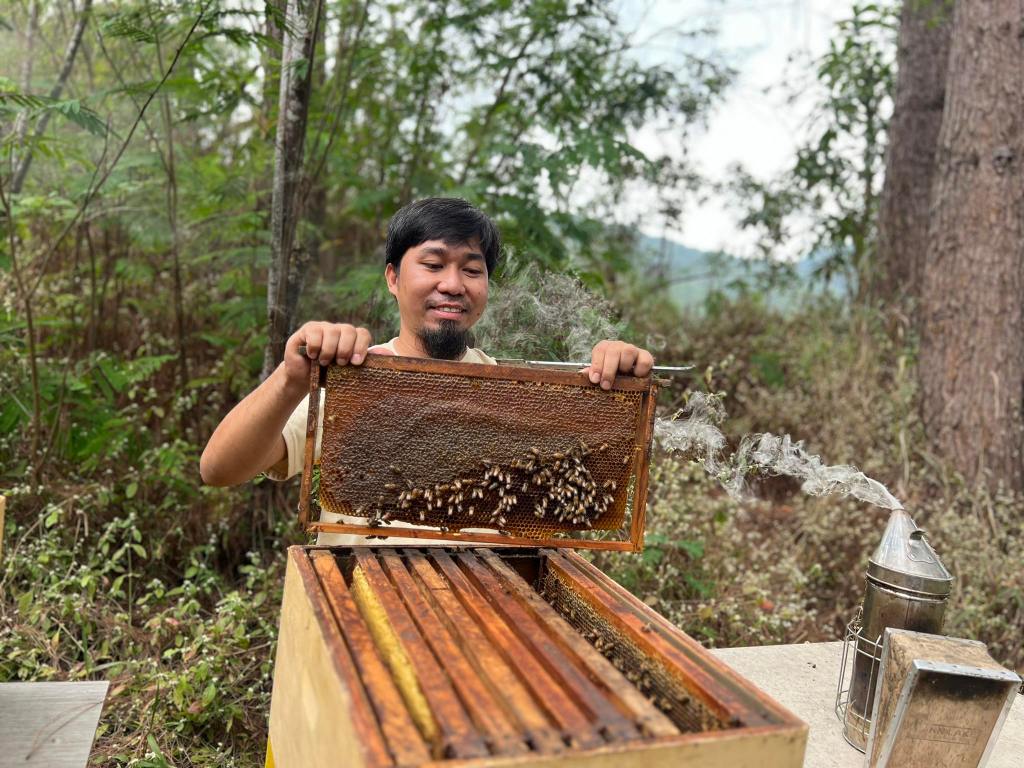
Harvesting honey begins with removing the frames from the hive. Beekeepers use bee brushes or gentle blowers to clear bees from the frames. It’s essential to ensure that only capped honey is harvested to maintain quality.
2. Uncapping the Honeycomb
The next step involves uncapping the wax-sealed honey cells. This is done using an uncapping knife or fork. The goal is to remove the wax cap without damaging the honeycomb structure.
3. Extracting Honey
The uncapped frames are then placed in a honey extractor, a centrifugal device that spins the frames to extract the honey. The honey is flung out of the combs and collects at the bottom of the extractor.
4. Filtering and Bottling
After extraction, the honey is filtered to remove any impurities, such as wax particles and bee parts. The filtered honey is then poured into clean, sterilized jars or bottles. Proper sealing is crucial to prevent contamination and preserve the honey’s quality.

Ensuring Honey Authenticity
In the Philippines, the Department of Science and Technology’s Philippine Nuclear Research Institute (DOST-PNRI) provides services to test the authenticity of honey. This ensures that the honey sold in the market is pure and unadulterated. If you are from another country, check with your local institutions to validate the authenticity of honey. Ensuring that your honey meets these standards can significantly boost consumer confidence and trust in your product.
Marketing and Selling Honey
1. Branding and Packaging
Creating a strong brand identity is vital for attracting customers. Design eye-catching labels and packaging that reflect the quality and purity of your honey. Include essential information such as the type of honey, its source, and any unique selling points.
2. Building an Online Presence
In today’s digital age, having an online presence is crucial. Create a professional website showcasing your honey products and providing information about your beekeeping practices. Utilize social media platforms to engage with potential customers and share the story behind your honey.
3. Exploring Sales Channels
There are several avenues for selling honey:
- Local Markets and Fairs: Participate in farmers’ markets, craft fairs, and food festivals to reach local consumers.
- Retail Stores: Approach local grocery stores, health food shops, and specialty stores to stock your honey.
- Online Sales: Set up an online store or sell through established e-commerce platforms like Shopee, Lazada, Etsy, Amazon, or local online marketplaces.
4. Educating Consumers
Educate your customers about the benefits of honey and its various uses. Share recipes, health benefits, and interesting facts about bees and beekeeping. An informed customer is more likely to appreciate the value of your product and become a loyal buyer.
Honey production is a meticulous process that requires dedication, knowledge, and care. By understanding the steps involved in extracting and processing honey, and implementing effective marketing strategies, beekeepers can turn their passion into a thriving business. With the growing demand for natural and sustainable products, there has never been a better time to venture into honey production. Ensuring the authenticity of your honey through institutions like the DOST-PNRI in the Philippines, or equivalent organizations in other countries, can further enhance the credibility and appeal of your products.
 bubuyog
Leave a comment