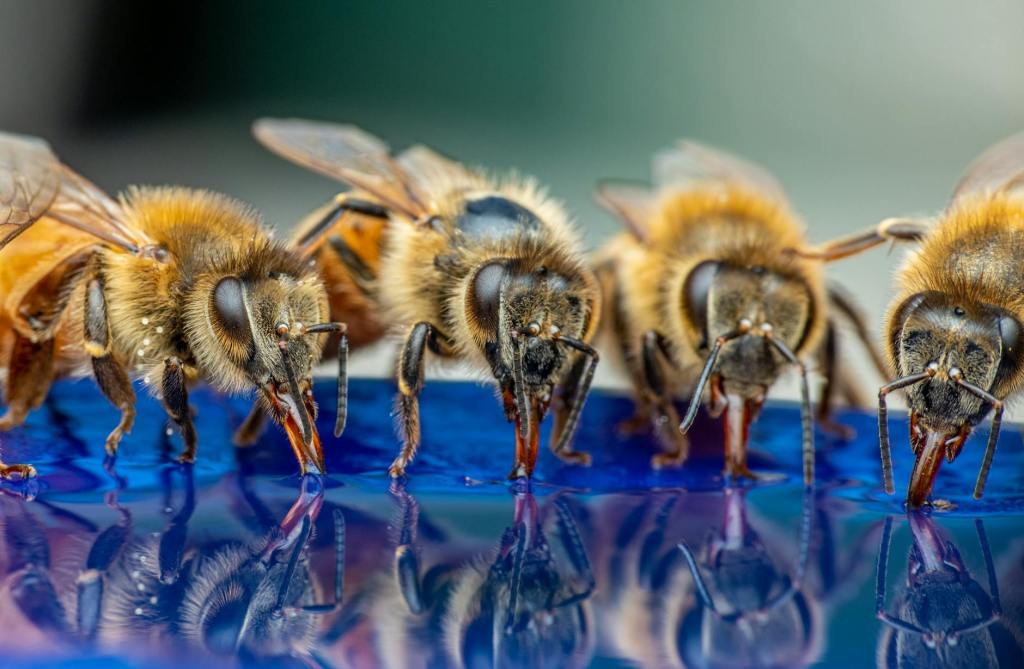
The honey bee is unique as the only insect that produces food consumed by humans. A honey bee can cover distances up to six miles at speeds of 15 miles per hour. To produce one pound of honey, bees collectively fly around 90,000 miles, equivalent to circling the globe three times. It requires one ounce of honey to fuel a bee’s flight around the world.
Honey consists of 80% sugars and 20% water. Bees produce beeswax from eight paired glands located on the underside of their abdomen. To biochemically generate each pound of beeswax, honey bees must consume approximately 17-20 pounds of honey. Regardless of external temperatures, which can range from 110 to -40 degrees Fahrenheit, bees maintain their central brood nest at a consistent 92-93 degrees Fahrenheit.
During late spring or early summer, a populous colony can house between 40,000 to 60,000 bees. The queen bee, living for about 2-3 years, is most active in the summer, laying up to 2,500 eggs per day to ensure the hive remains robust. The queen mates with up to 17 drones over a brief mating period of 1-2 days. Throughout her 3-4 year lifespan, she may lay between 600-800 and even up to 1,500 eggs daily, a production equal to her own weight, with constant care from attendant worker bees.
Worker honey bees have a lifespan of about four weeks during spring or summer, extending up to six months in the winter. On average, a honey bee will produce only one-twelfth of a teaspoon of honey in its lifetime. These bees fly at speeds of up to 15 miles per hour, with their wings beating 11,400 times per minute, creating their distinctive buzz. A single collection trip involves visiting 50 to 100 flowers.
Honey bees, also known scientifically as Apis Mellifera, are essential pollinators and environmentally friendly. Fermented honey, known as mead, is the oldest known fermented beverage. The term “honeymoon” comes from the Norse tradition of consuming large quantities of mead during the first month of marriage.
source:
American Bee Journal. (n.d.). Fun facts about honey bees. Retrieved from https://americanbeejournal.com/tiposlinks/fun-facts/
 bubuyog
Leave a comment