Introduction
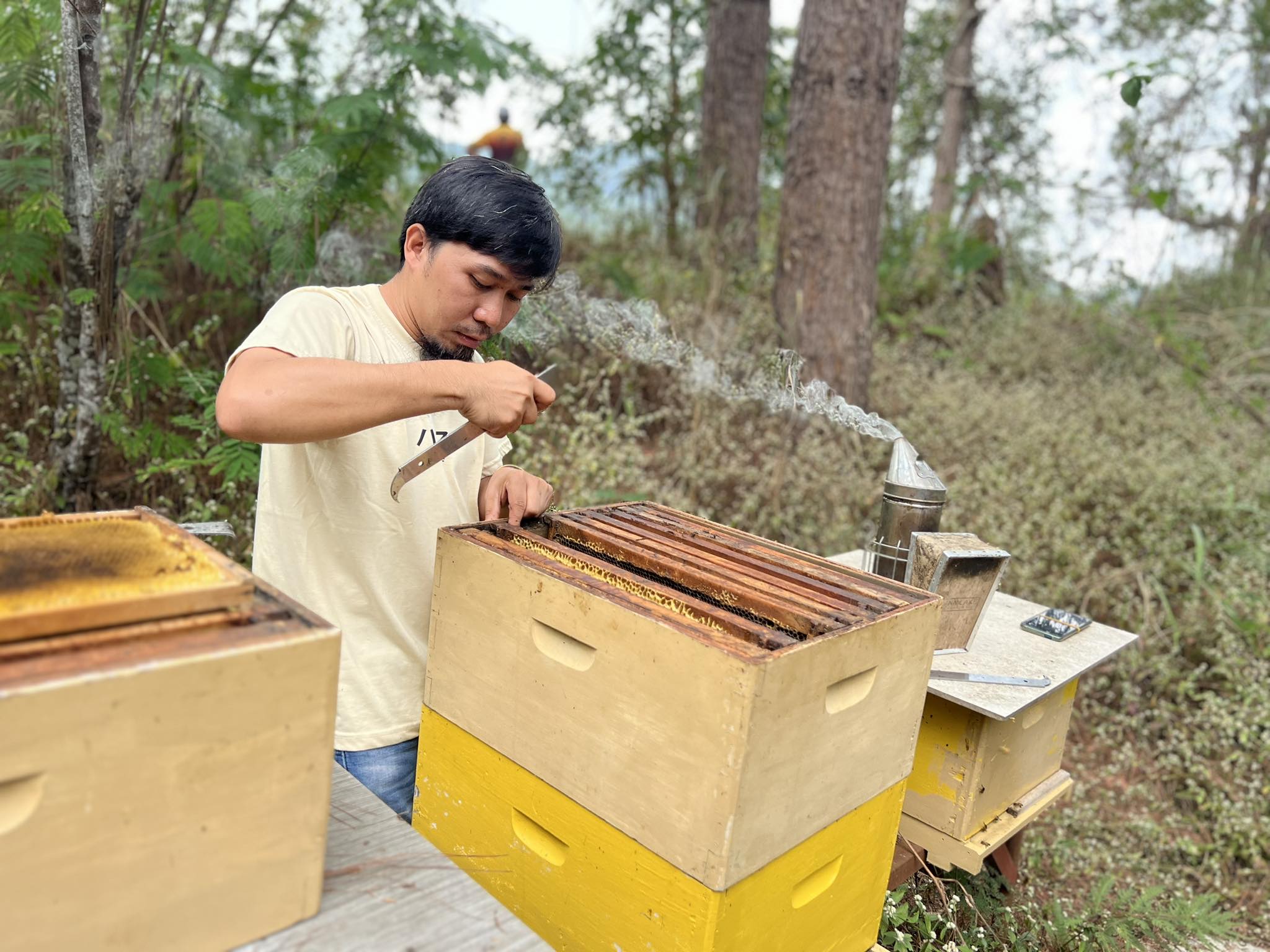
Why is research and development important in beekeeping? The answer lies in our ability to understand and improve best practices in beekeeping, providing effective solutions to emerging problems. Research and development help enhance the efficiency and productivity of beekeeping, ensuring the health of bee colonies and the quality of honey produced.
Insights from Advanced Beekeeping Practices
My friend, Sir Dan Lyster Vallejo, a beekeeper in Canada, shares insights into the advanced beekeeping practices in Manitoba, where he works at a family-run apiary. He highlights the Knowledge Transfer and Research Program (KTRP) of the Manitoba Beekeepers’ Association, which includes education, research, and extension services. This program offers services of hygienic behavior testing of bees at their apiary. Freeze-kill brood hygienic testing protocols were refined by Marla Spivak and Gary Reuter in Minnesota, and according to them: colonies that have remove 95% of frozen dead pupae in the test (24 hour removal period) indicates that a bee breed can be classified as hygienic. Hygienic behaviour has been correlated to the ability to better withstand and manage chalkbrood and AFB. It may also be peripherally related to VSH (varroa sensitive hygiene), however, VSH behaviour testing requires a different set of tests, such as the Harbo assay.
A Proven Method: Freeze-kill Brood with Liquid Nitrogen
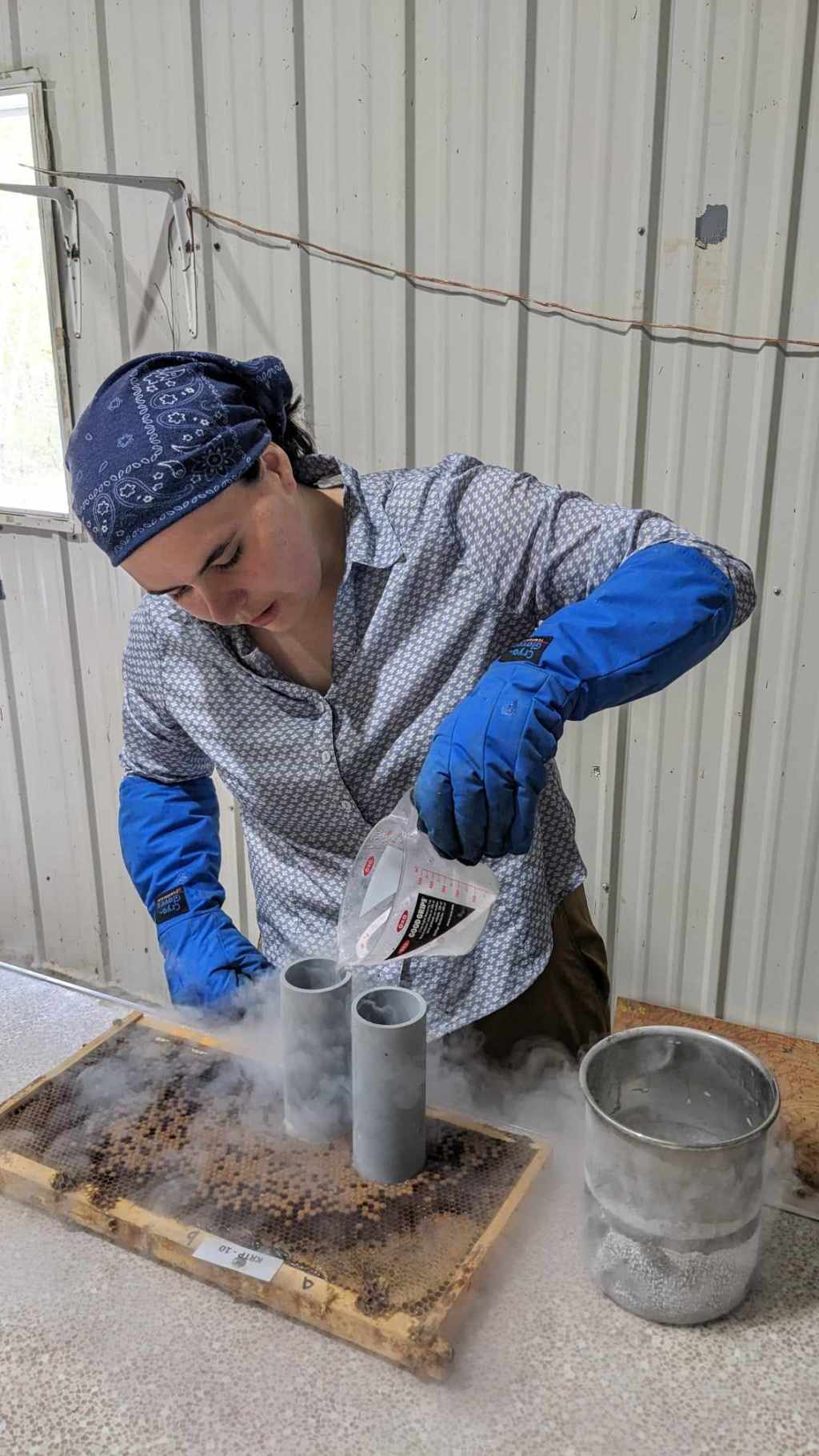
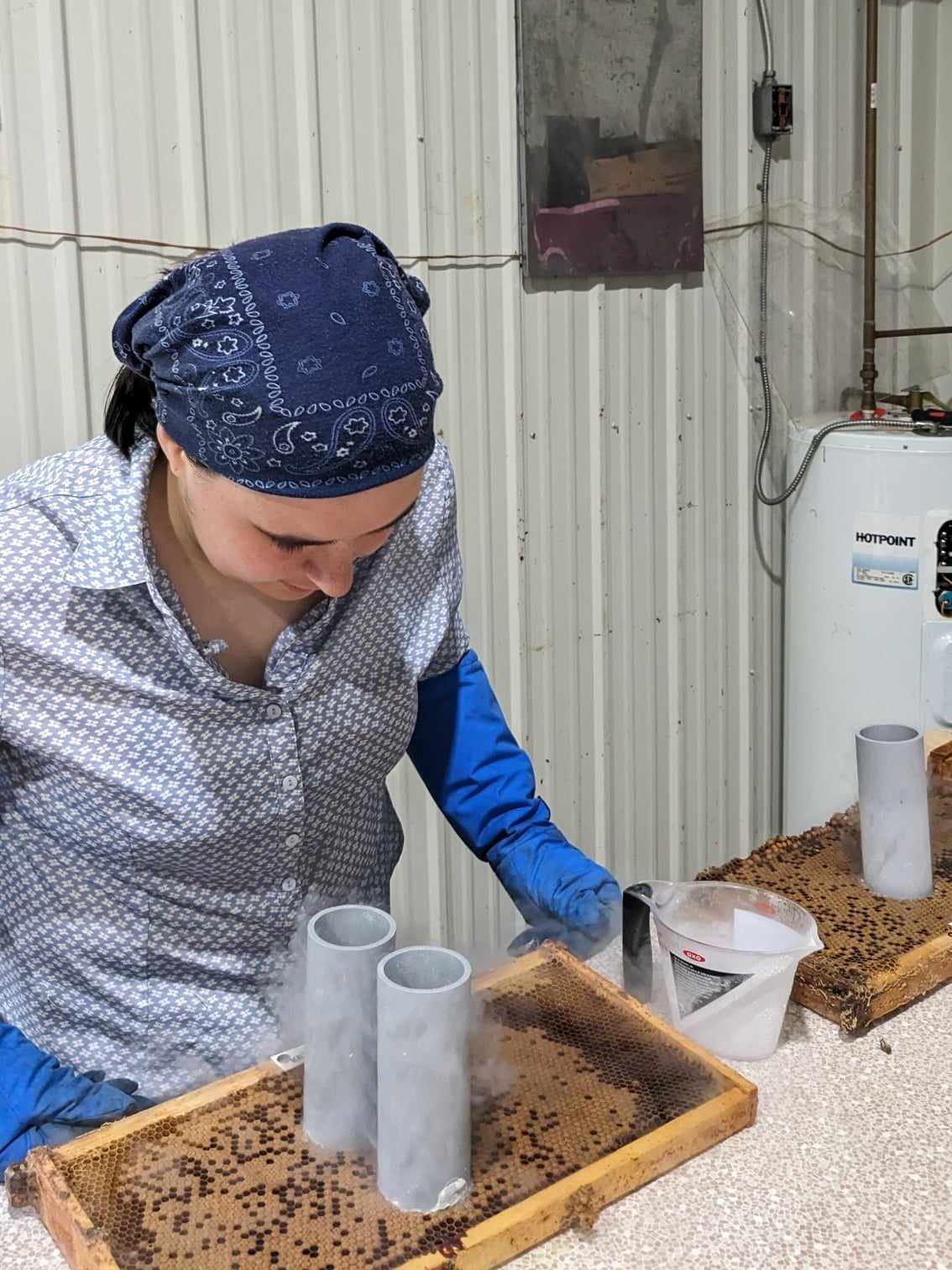
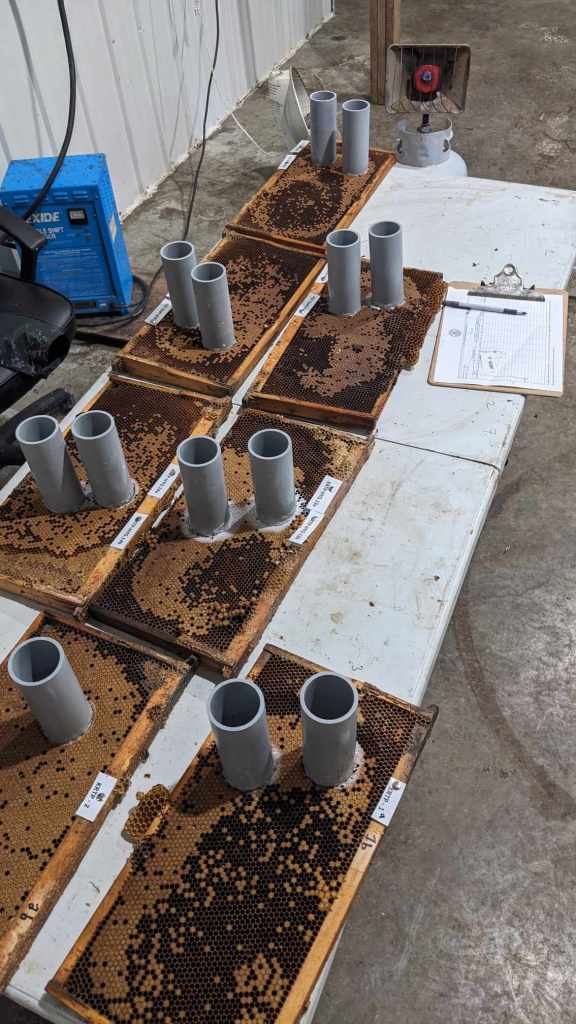
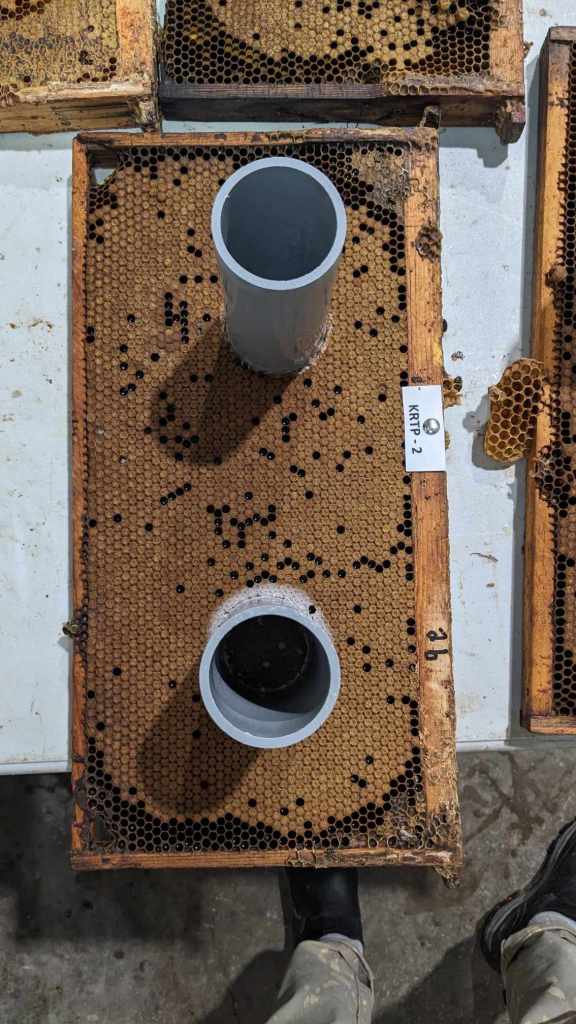
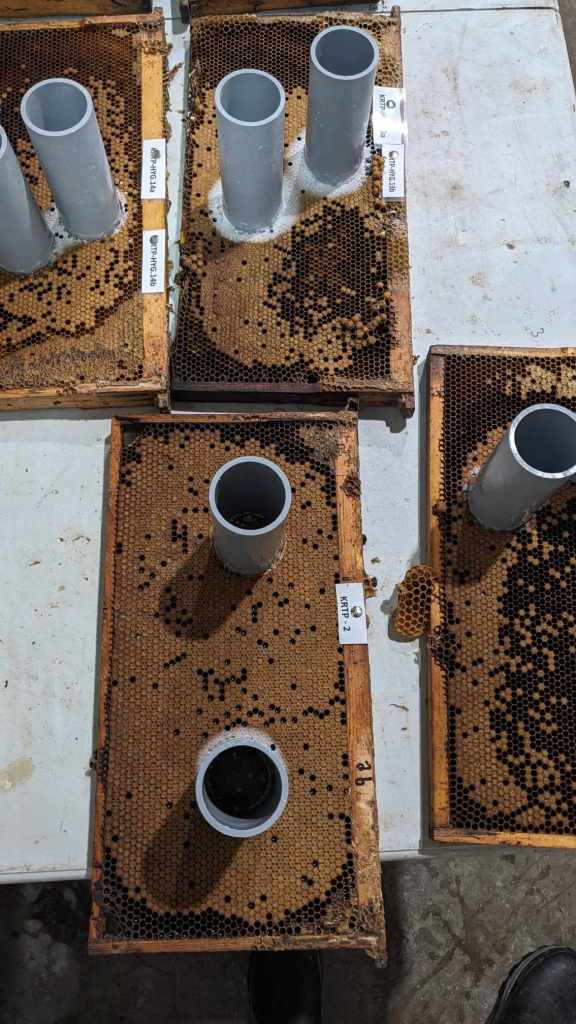
The freeze-kill brood method requires the use of liquid nitrogen to freeze a section of brood cells, This process uses liquid nitrogen to freeze sections of brood cells, which is more efficient and less harmful to the combs than older methods of cutting out and freezing brood cells. The method involves placing a hollow cylinder, typically a PVC pipe, over a selected area of the brood frame and carefully pouring liquid nitrogen into it. The extreme cold (-195°C) quickly freezes the brood cells within the cylinder, allowing researchers to assess how effectively the bees remove the dead brood, a key indicator of hygienic behavior. This method is advantageous because it reduces the destruction of comb and is cost-effective, with liquid nitrogen being relatively easy to source from gas and welding suppliers or university campus suppliers.
Safety and Protocol in Liquid Nitrogen Use
Handling liquid nitrogen requires strict safety measures due to its extremely low temperature, which can cause severe frostbite upon contact. Appropriate safety gear must be worn, and the liquid nitrogen must be stored and handled according to specific guidelines to ensure safety during the testing process.
Testing Process and Observations
The liquid nitrogen is poured into the cylinder inserted into the brood comb, and after freezing the targeted cells, researchers observe the bee’s response over 24 hours. The number of uncapped or cleaned cells is recorded, providing data on the colony’s hygienic behavior. It’s crucial to conduct these tests multiple times to confirm consistency in the bees’ hygienic responses.
Results and Findings
The apiary features different breeds of honey bees, including their crossbred queen, the Derrco Queen, named after the company that underwent crossbreeding from different queen lineages. The Derrco Queen scored the highest in the VSH test. Other breeds tested include Saskatraz, Hawaiian, Carpathian, Russian, and Buckfast. The results varied, with some breeds scoring high and others low in the VSH test. Besides breeding and grafting queen bees, the apiary also adopts research-based methods for treating Varroa mites.
Scientific Approaches in Beekeeping
Incorporating scientific approaches in beekeeping is crucial for several reasons. The goal is to raise queens with desirable characteristics such as longevity, hygienic behavior, controlled swarming behavior, efficient post-winter brood rearing, and excellent honey harvest performance. These characteristics are essential for helping farmers pollinate their crops and produce high-quality agricultural products. Ultimately, the aim is to ensure that the produce we consume is safe and nutritious.
Research and development in beekeeping are vital for advancing the industry and ensuring the sustainability of bee populations. By adopting scientific methods and continuous improvement, beekeepers can enhance the health and productivity of their colonies, contributing to better agricultural practices and higher quality produce for consumers. The Knowledge Transfer and Research Program (KTRP) of the Manitoba Beekeepers’ Association, with its focus on education, research, and extension services, plays a pivotal role in this ongoing effort.
 bubuyog
Leave a comment