Introduction
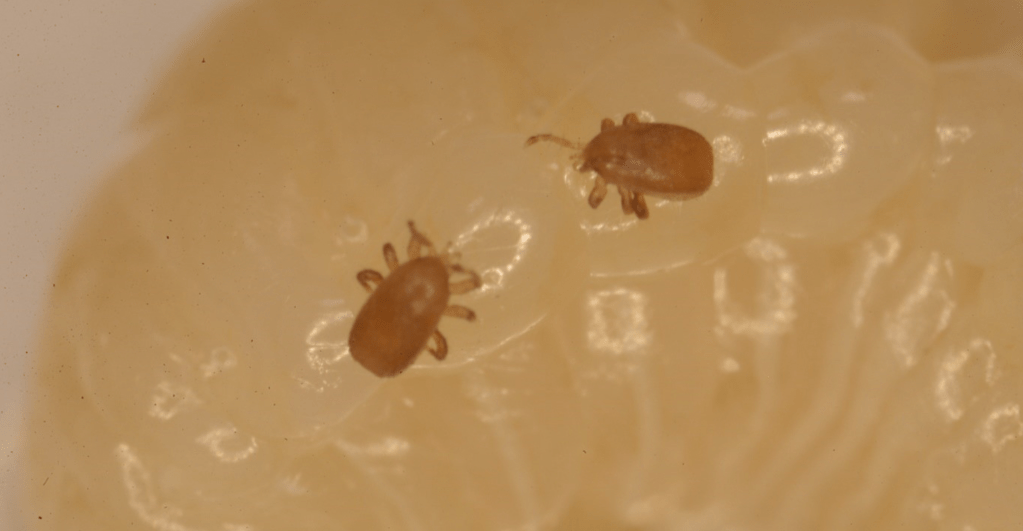
The study Managing the Parasitic Honey Bee Mite Tropilaelaps mercedesae: Evaluating the Efficacy of Brood Interruption and Organic Acids presents significant findings in the ongoing challenge of managing Tropilaelaps mercedesae, a major parasitic mite that threatens honey bee populations globally. With increasing concerns over chemical resistance and honey contamination caused by conventional acaricides, this study explores an alternative approach—integrating brood interruption with organic acid treatments. This reaction paper critically evaluates the study’s findings, their implications for commercial beekeepers, and their significance within academic research on sustainable apiculture.
Summary of the Study
The study examines a combined strategy involving brood interruption and the application of organic acids, such as formic and oxalic acids, to control Tropilaelaps mercedesae infestations in honey bee colonies. The research finds that interrupting brood rearing effectively disrupts the mite’s reproductive cycle, preventing its proliferation, while organic acids provide an additional layer of mite suppression. This method is positioned as an effective and sustainable alternative to chemical treatments, which have led to acaricide resistance and chemical residues in honey products. The study further highlights that this integrated pest management (IPM) approach significantly reduces mite infestations while preserving colony health.
From a scientific standpoint, this study contributes valuable insights into sustainable apiculture and integrated pest management. The research aligns with previous studies on IPM strategies, reinforcing the importance of non-chemical approaches in combating honey bee parasites. One of the strengths of the study is its empirical approach—combining field trials with statistical analysis to validate the efficacy of brood interruption and organic acid application. Additionally, the research highlights the ecological impact of synthetic miticides and promotes alternative methods that minimize environmental harm while ensuring colony resilience.
However, a potential limitation is the variability in the effectiveness of brood interruption, as it depends on seasonal timing, colony strength, and external environmental factors. Further studies could refine the optimal duration of brood interruption to balance colony productivity with effective mite suppression. Additionally, long-term research is necessary to determine whether Tropilaelaps mercedesae could develop resistance to organic acids in a manner similar to synthetic miticides.
For commercial beekeepers, the findings of this study present a compelling case for adopting sustainable pest management practices. The combination of brood interruption and organic acids offers a practical solution to Tropilaelaps mercedesae infestations without compromising honey purity or colony health. This method aligns with the increasing consumer demand for organic, chemical-free honey, which can enhance market competitiveness and profitability.
However, implementing brood interruption requires strategic planning, as temporarily halting brood production can impact colony population dynamics and honey yields. Beekeepers must carefully time the interruption to minimize disruptions to foraging activity. Additionally, while organic acids are effective, their application requires precise dosing to avoid harming bee colonies. Training and education on proper implementation will be crucial for large-scale adoption.
Practical Implications
This study highlights the urgent need for beekeepers to transition from chemical-dependent pest control to sustainable methods. The application of organic acids, when combined with brood interruption, offers a long-term strategy that aligns with both environmental sustainability and economic viability. For commercial operations, this approach can help maintain high-quality honey production while ensuring colony survival.
For researchers, the study paves the way for further exploration into refining these techniques, optimizing treatment schedules, and investigating additional natural alternatives to chemical miticides. Collaboration between beekeepers and academic institutions will be essential to developing region-specific best practices for Tropilaelaps mercedesae management.
Conclusion
The study on Tropilaelaps mercedesae management represents a critical advancement in sustainable apiculture. By integrating brood interruption with organic acid treatments, beekeepers can effectively reduce mite infestations while minimizing chemical dependency. Although challenges remain—such as optimizing brood interruption timing and ensuring proper acid application—the long-term benefits of this approach outweigh the short-term limitations. Moving forward, further research and beekeeper education will be essential to refining these methods and ensuring their widespread adoption. For both academic researchers and commercial beekeepers, this study provides a foundation for improving honey bee health while supporting sustainable and profitable beekeeping practices.
 bubuyog
Leave a comment