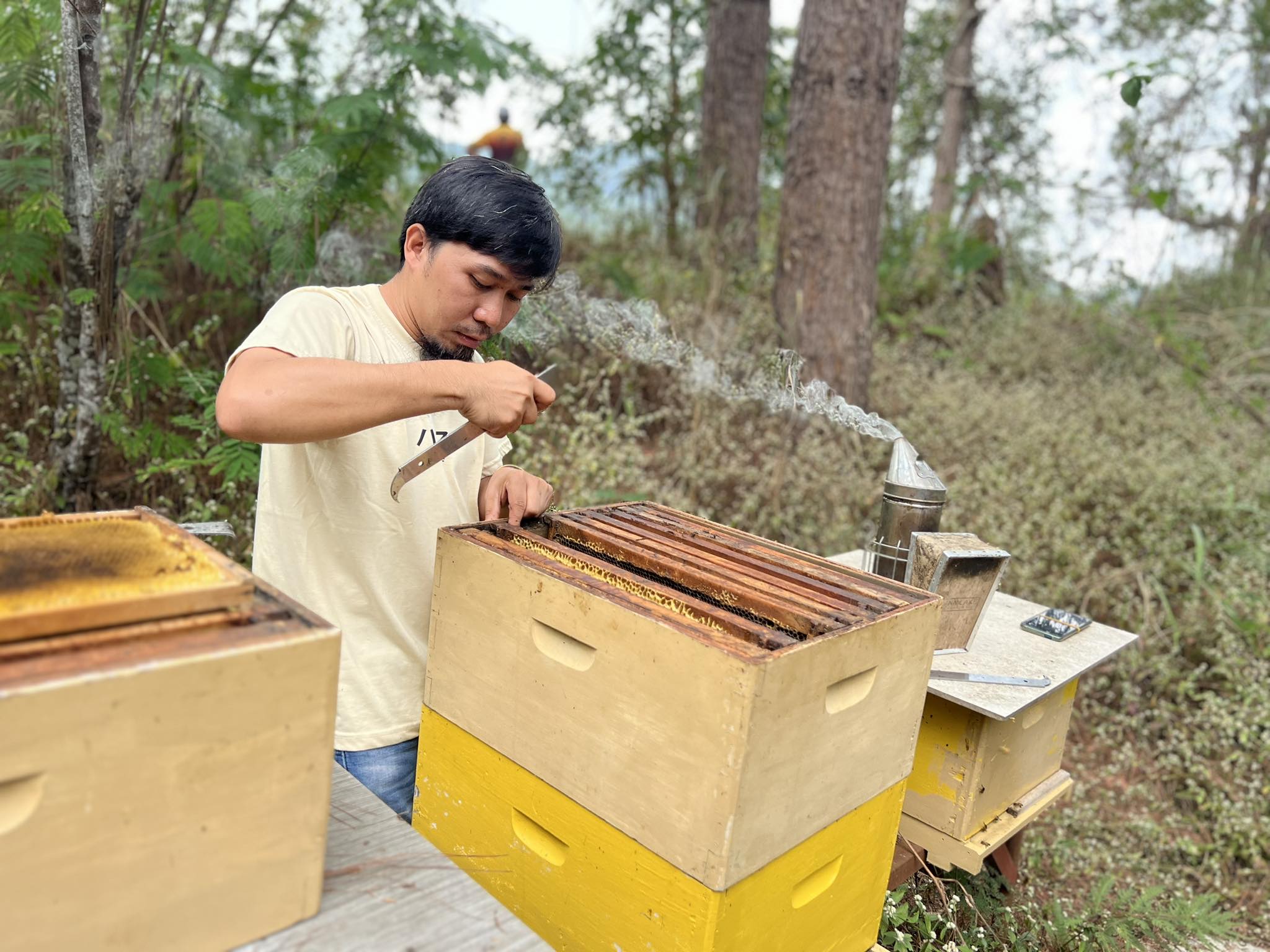
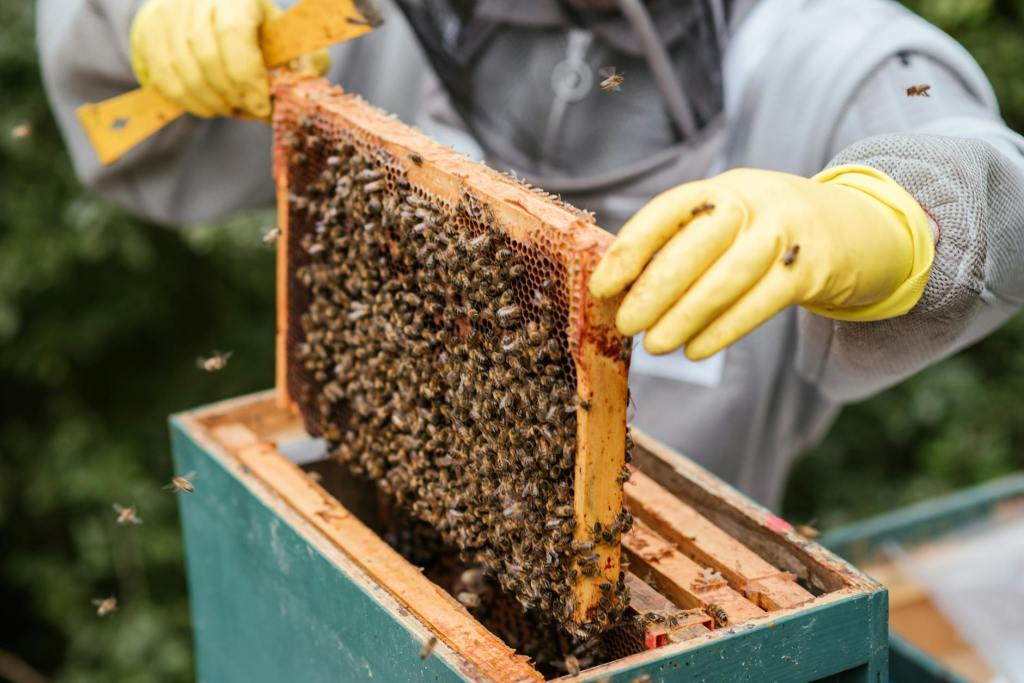
Beekeeping is a rewarding hobby and profession that offers the opportunity to engage with nature while contributing to the health of our environment. For beginners, getting started in beekeeping can seem daunting, but having the right tools and protective clothing can make the process much easier and more enjoyable. This guide covers the essential equipment you need to begin your beekeeping journey safely and effectively.
Beekeeping Tools
- Hive Tool
- Description: A versatile tool used to open hives, scrape off propolis, and manipulate frames.
- Importance: An essential tool for any beekeeper, making hive inspections and maintenance easier.
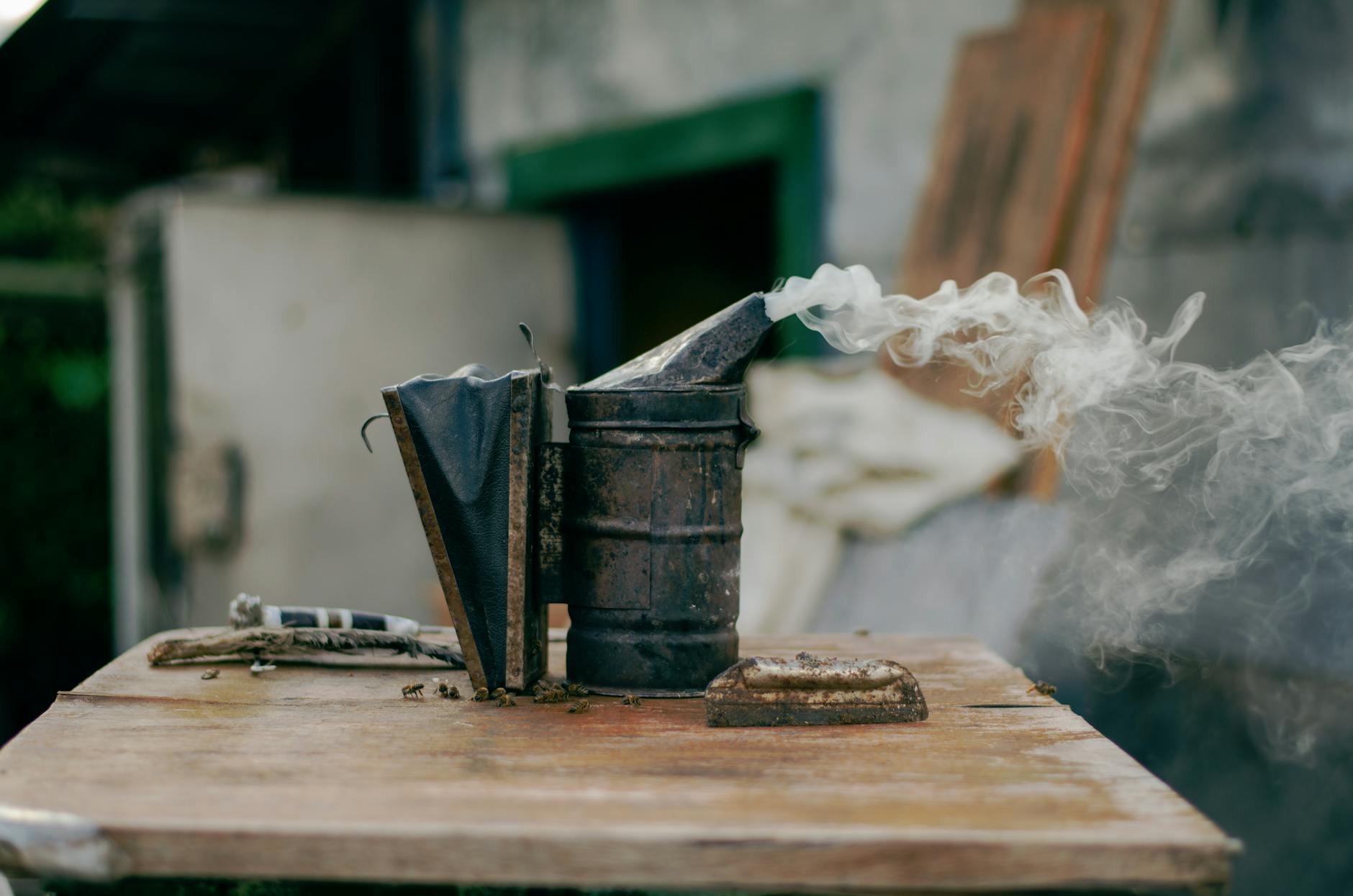
- Smoker
- Description: A device that produces smoke to calm bees.
- Importance: Helps manage the bees’ defensive behavior, making it safer to inspect and work in the hive.
- Bee Brush
- Description: A soft-bristled brush used to gently remove bees from frames.
- Importance: Useful for clearing bees without harming them, especially during inspections and honey extraction.
- Frame Grip
- Description: A tool to help lift frames from the hive.
- Importance: Provides better control and reduces the risk of dropping frames, making it easier to handle frames.
- Uncapping Knife
- Description: A knife used to remove the wax cappings from honeycomb cells.
- Importance: Essential for preparing frames for honey extraction.
- Bee Feeder
- Description: A device used to provide supplemental feed (sugar syrup) to bees.
- Importance: Helps keep the colony strong during periods when natural nectar sources are scarce.
Protective Clothing
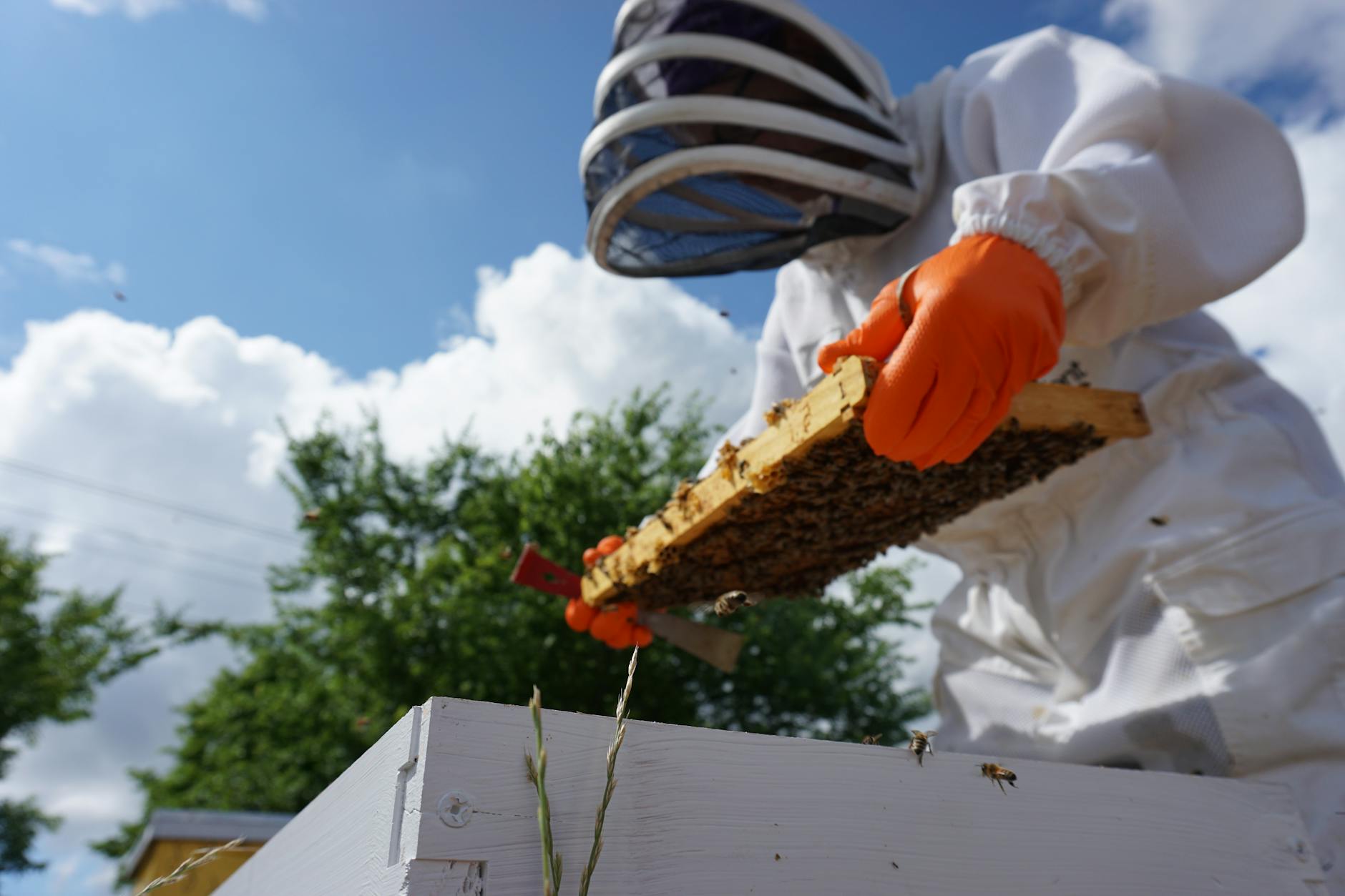
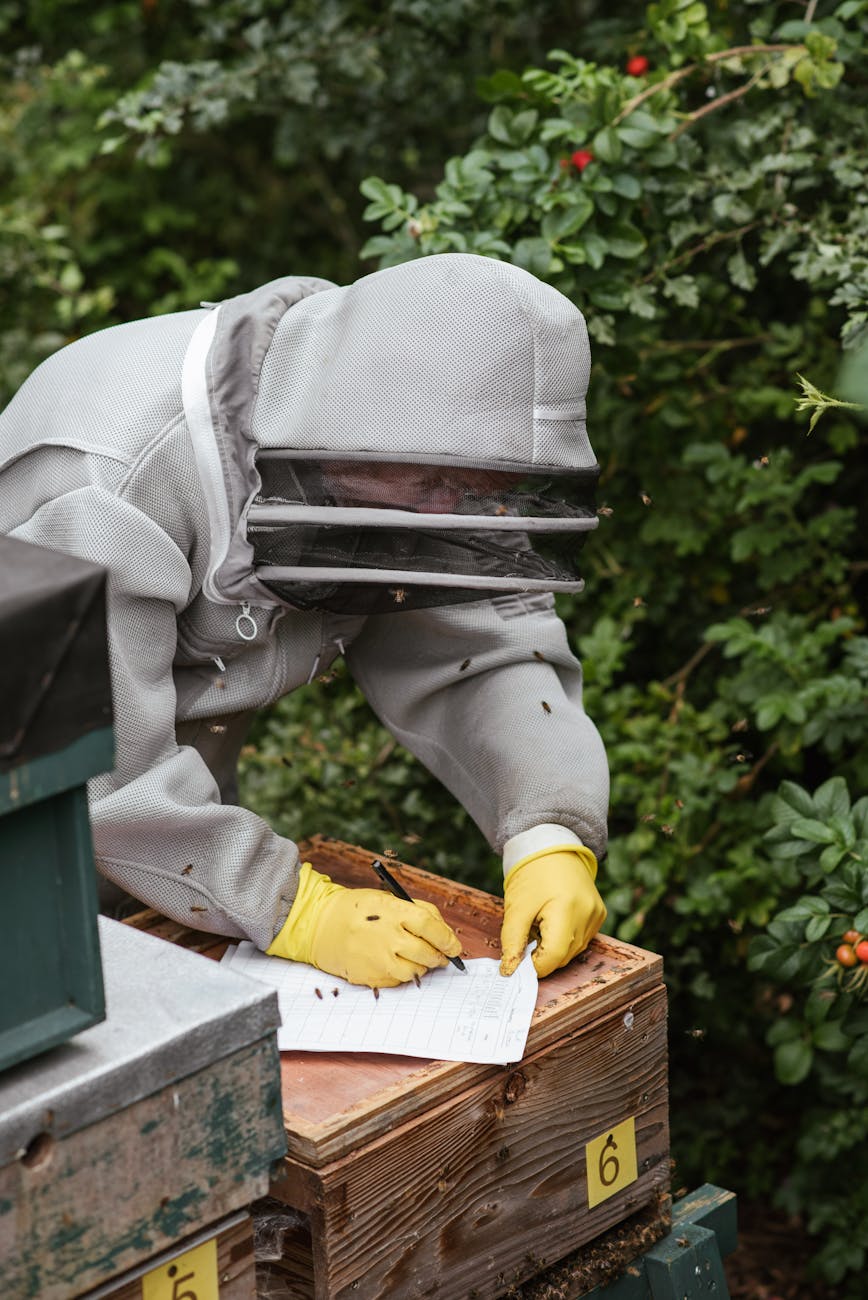
- Beekeeping Suit
- Description: A full-body suit made from thick material, often white or light-colored.
- Importance: Protects the beekeeper from stings, allowing for safer handling of the bees and hive.
- Veil
- Description: A mesh head covering that protects the face and neck.
- Importance: Essential for protecting the most sensitive areas from bee stings.
- Gloves
- Description: Protective gloves made from leather or rubber.
- Importance: Protects hands and wrists from stings while handling hive components.
Tips for Beginners
- Start Small: Begin with one or two hives to learn the basics of beekeeping without becoming overwhelmed.
- Learn Continuously: Read books, watch videos, and consider joining a local beekeeping club to gain knowledge and support.
- Be Patient: Beekeeping requires patience and observation. Take your time to learn how to handle bees and manage your hives.
- Stay Calm: Bees can sense agitation. Move slowly and calmly around your hives to avoid provoking them.
- Record Keeping: Keep detailed records of your hive inspections and honey production. This will help you track the health and progress of your colonies.
Starting your beekeeping journey with the right tools and protective clothing is crucial for your success and safety. By investing in these essentials, you can create a productive and enjoyable beekeeping experience. Remember, beekeeping is a continuous learning process, so stay curious and engaged with the beekeeping community. Happy beekeeping!
If you have any other preferences or would like to add additional tips or recommendations, please let me know in the comment section.
 bubuyog
Leave a comment